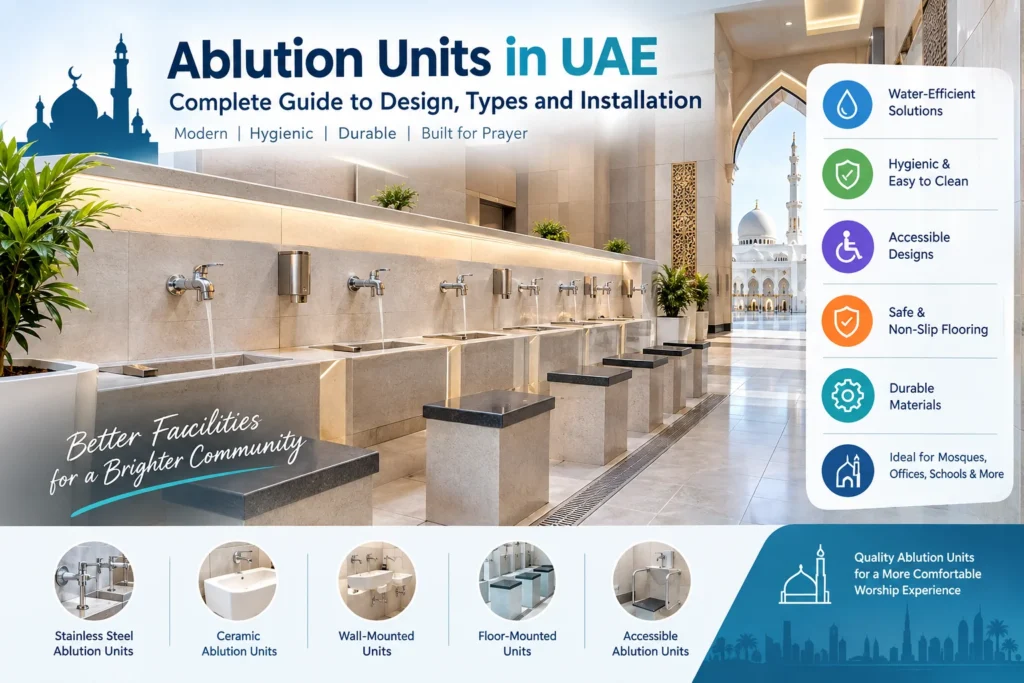
Ablution units are an essential facility in mosques, prayer rooms, Islamic centres, schools, commercial buildings, offices, residential developments, and other properties across the UAE. Designed for performing Wudu (ablution) before prayer, these units provide a practical, hygienic, and comfortable place for users to wash according to Islamic requirements.
With modern construction standards and increasing attention to accessibility, water efficiency, hygiene, and user comfort, choosing the right ablution units in the UAE requires careful consideration of design, materials, drainage, plumbing, and installation.
This guide explains everything you need to know about ablution units, including their types, key features, benefits, design considerations, and important factors to consider when installing them in the UAE.
What Are Ablution Units?
Ablution units are specially designed washing facilities that allow people to perform Wudu before prayer. Unlike ordinary washbasins, ablution units are designed around the specific requirements of washing the hands, mouth, nose, face, arms, head, ears, and feet.
A typical ablution area may include multiple individual washing positions, dedicated taps, foot-washing spaces, drainage systems, seating, shelves, and non-slip flooring.
In mosques and prayer facilities, ablution areas are normally positioned close to the prayer space to provide convenient access for worshippers.
The design should also prevent excessive water splashing and allow the area to remain clean, safe, and easy to maintain.
Why Are Ablution Units Important in the UAE?
The UAE has a large number of mosques and prayer facilities located in residential communities, commercial buildings, shopping centres, workplaces, educational institutions, transport facilities, and public areas.
Because many people use these facilities every day, a properly designed ablution area can make a significant difference to hygiene and user experience.
UAE building guidance specifically recognises ablution facilities as an important component of mosque and prayer-room design. For example, Ras Al Khaimah’s building regulations specify minimum ablution provisions according to mosque capacity, while Dubai’s Building Code includes ablution facilities within prayer-room planning requirements.
A well-planned ablution facility can provide:
- Convenient access before prayer
- Better hygiene
- Improved water management
- Safer foot washing
- Reduced water splashing
- Easier cleaning and maintenance
- Better accessibility
- A more comfortable experience for worshippers
Types of Ablution Units
Different types of ablution units can be installed depending on the building, available space, number of users, and project requirements.
1. Stainless Steel Ablution Units
Stainless steel ablution units are popular because they are durable, hygienic, and relatively easy to clean. Quality stainless steel can withstand frequent use and exposure to water.
These units are particularly suitable for busy mosques, Islamic centres, schools, workplaces, and public facilities where durability is important.
2. Ceramic Ablution Units
Ceramic units can provide a clean and traditional appearance. They are available in different designs and can be incorporated into custom architectural interiors.
However, the supporting structure and floor design should be carefully planned to prevent water leakage and improve long-term durability.
3. Wall-Mounted Ablution Units
Wall-mounted designs can help save floor space and create a clean appearance. They can be suitable for smaller prayer rooms, offices, commercial properties, and compact mosque facilities.
4. Floor-Mounted Ablution Units
Floor-mounted units provide a traditional and robust solution for high-traffic areas. They can accommodate multiple users and are often suitable for larger mosque ablution facilities.
5. Accessible Ablution Units
Accessible ablution facilities are designed for wheelchair users, elderly people, and people with limited mobility.
Accessibility is particularly important in public religious buildings. Abu Dhabi’s Sahel Building Rating System guidance states that at least 5% of ablution spaces, with a minimum of one, should be wheelchair accessible for each gender-specific ablution space.
Key Features of High-Quality Ablution Units
When selecting ablution units in the UAE, several features should be considered.
Water-Efficient Faucets
Ablution facilities can experience considerable water usage because many people may use the facility throughout the day.
Water-efficient faucets, aerators, metering controls, and sensor-based systems can help reduce unnecessary water consumption. Abu Dhabi mosque guidance also highlights durable and water-efficient faucets for ablution facilities.
Effective Drainage
Drainage is one of the most important aspects of ablution area design.
A good drainage system should quickly remove used water and reduce standing water. Poor drainage can create unpleasant odours, slippery surfaces, water damage, and maintenance problems.
Drainage channels and floor slopes should therefore be carefully planned during installation.
Non-Slip Flooring
Ablution areas naturally become wet. Consequently, flooring should provide sufficient slip resistance.
This is particularly important in facilities used by children, elderly people, and people with mobility limitations. Abu Dhabi accessibility guidance recommends firm, stable and slip-resistant surfaces for accessible ablution areas.
Comfortable Seating
Seating can make foot washing easier and more comfortable.
A well-designed unit should provide appropriate space for users to sit safely while washing their feet. Seating should be durable, easy to clean, and integrated with the overall design.
Splash Prevention
Water splashing can make the surrounding floor unnecessarily wet.
Modern ablution units should therefore be designed to minimise splashing through appropriate faucet positioning, basin depth, partitions, floor gradients, and drainage.
Shelving and Storage
Small shelves can be useful for keeping personal items while performing ablution.
Abu Dhabi mosque design guidance includes integrated shelf provision within ablution-unit design.
Ablution Units for Mosques in the UAE
Mosques generally require more carefully planned ablution facilities because they can experience high numbers of users around prayer times.
The required number of ablution positions depends on factors such as mosque capacity, location, type of prayer facility, and applicable local authority requirements.
For example, Ras Al Khaimah’s building regulation specifies a minimum of one ablution unit per 40 worshippers for certain mosque capacities, with a minimum of two units, while separate requirements are provided for female prayer areas.
This demonstrates why mosque designers should not simply select a number of units based on available floor space. The expected number of worshippers and applicable authority requirements should be considered during planning.
Ablution Units for Prayer Rooms
Ablution facilities are not limited to large mosques.
Many offices, hotels, shopping centres, educational buildings, factories, and commercial properties in the UAE provide dedicated prayer rooms.
Dubai’s Building Code states that public-use buildings, business buildings, and hotel establishments should provide male and female prayer rooms with separate entrances and facilities, and that prayer rooms should be provided with ablution spaces.
Therefore, a compact and efficient ablution design can be an important part of a commercial prayer-room project.
Ablution Area Design Considerations
Before installing ablution units, several factors should be evaluated.
Available Space
The available floor area will determine the number and arrangement of washing positions.
Designers should provide sufficient circulation space so users can enter, perform ablution, and leave without unnecessary congestion.
Number of Users
The expected number of users is one of the most important factors.
A small office prayer room may require only a few washing positions, while a large mosque may require considerably more.
Male and Female Facilities
Where separate male and female prayer areas are required, ablution facilities should be planned accordingly.
UAE regulations and guidance commonly address separate facilities and circulation for male and female worshippers.
Plumbing and Water Supply
Adequate water pressure and properly sized plumbing are essential for multi-user ablution areas.
The drainage system should also be designed to handle simultaneous use during busy prayer periods.
Ventilation
Good ventilation can help control humidity, odours, and moisture.
Ablution and toilet facilities should therefore be considered as part of the building’s overall mechanical and ventilation design. Abu Dhabi mosque development guidance specifically addresses ventilation and exhaust considerations for ablution and toilet facilities.
Accessibility in Ablution Facilities
Accessibility should be included from the beginning of the design rather than added later.
An accessible ablution position may include:
- Appropriate wheelchair approach space
- Accessible circulation routes
- Suitable seating or support
- Slip-resistant flooring
- Accessible faucet controls
- Appropriate height and reach ranges
- Grab/support features where required
- Clear movement space
This allows elderly users and people with limited mobility to perform ablution more independently.
Hygiene and Maintenance
Ablution units require regular cleaning because they are frequently exposed to water, soap, dirt, and foot traffic.
A good maintenance plan should include:
- Regular floor cleaning
- Drain cleaning
- Faucet inspection
- Leak detection
- Removal of standing water
- Periodic plumbing checks
- Inspection of sealants and joints
- Replacement of damaged fittings
Choosing easy-to-clean materials can reduce long-term maintenance requirements.
How to Choose Ablution Units in the UAE
Before purchasing or installing ablution units, consider the following checklist:
1. Determine the number of users:
Estimate normal and peak usage, particularly around Friday prayers and busy prayer times.
2. Check available space:
Measure the room and plan circulation, seating, drainage, and access.
3. Select durable materials:
Choose materials suitable for frequent exposure to water and cleaning chemicals.
4. Consider water efficiency:
Use efficient taps and suitable controls to minimise unnecessary water consumption.
5. Plan drainage carefully:
Ensure that wastewater can be removed quickly without creating standing water.
6. Include accessibility:
Provide suitable accessible ablution positions where required.
7. Consider maintenance:
Select products that can be cleaned, repaired, and maintained easily.
8. Check local requirements:
UAE requirements can vary by emirate and project type. Always confirm the latest requirements with the relevant authority and project consultant before construction.
Benefits of Professionally Designed Ablution Units
Investing in a professionally designed ablution facility provides several long-term benefits.
Better User Experience
Comfortable seating, appropriate spacing, good drainage, and easy access make ablution more convenient.
Improved Safety
Slip-resistant flooring and effective drainage can reduce the risk associated with wet floors.
Better Hygiene
Easy-to-clean surfaces and effective water drainage support a cleaner environment.
Reduced Water Waste
Water-efficient taps and controls can help reduce unnecessary water consumption.
Long-Term Durability
Quality materials and professional installation can help the facility withstand frequent daily use.
Better Accessibility
Accessible facilities allow more people to use the prayer facility comfortably and independently.
Conclusion
Ablution units are an important part of mosque and prayer-room design throughout the UAE. A successful ablution facility needs more than simply installing taps and basins. It should combine durability, hygiene, accessibility, efficient drainage, water management, safety, comfort, and practical design.
Whether the project involves a large mosque, Islamic centre, office prayer room, school, hotel, shopping centre, or commercial building, the right ablution units can provide a reliable and comfortable facility for users.
Because requirements can differ between emirates and project types, developers, architects, contractors, and property owners should verify the applicable local regulations before finalising the design. With appropriate planning and quality installation, a well-designed ablution area can provide dependable service for years while supporting the needs of worshippers.
Frequently Asked Questions About Ablution Units
What are ablution units?
Ablution units are specialised washing facilities designed for Muslims to perform Wudu before prayer. They typically include dedicated faucets, washing positions, seating, drainage, and other features designed for comfortable foot and body washing.
What materials are best for ablution units?
Stainless steel, ceramic, and other durable waterproof materials can be suitable for ablution facilities. The best choice depends on the project’s budget, design, expected usage, maintenance requirements, and environmental conditions.
Are accessible ablution units required in the UAE?
Accessibility requirements can apply to prayer facilities and ablution areas. Abu Dhabi guidance, for example, requires a percentage of ablution spaces to be accessible, subject to the applicable requirements.
How many ablution units does a mosque need?
The number depends on the mosque’s capacity, location, type, and applicable local authority regulations. Some UAE regulations specify minimum ratios based on the number of worshippers, so the project should be assessed according to the applicable emirate requirements.
How can water consumption be reduced in ablution areas?
Water-efficient faucets, aerators, sensor or metering controls, proper maintenance, and user awareness can help reduce water consumption. Efficient drainage and regular leak inspections are also important.